The Benefits of CNC Control in Mattress Sewing and Quilting Machines
Date:2024/09/05
View:1382
Related Products
Mattress Production Line
Mattress Tape Edging
Spring Manufacturing
Mattress Packaging
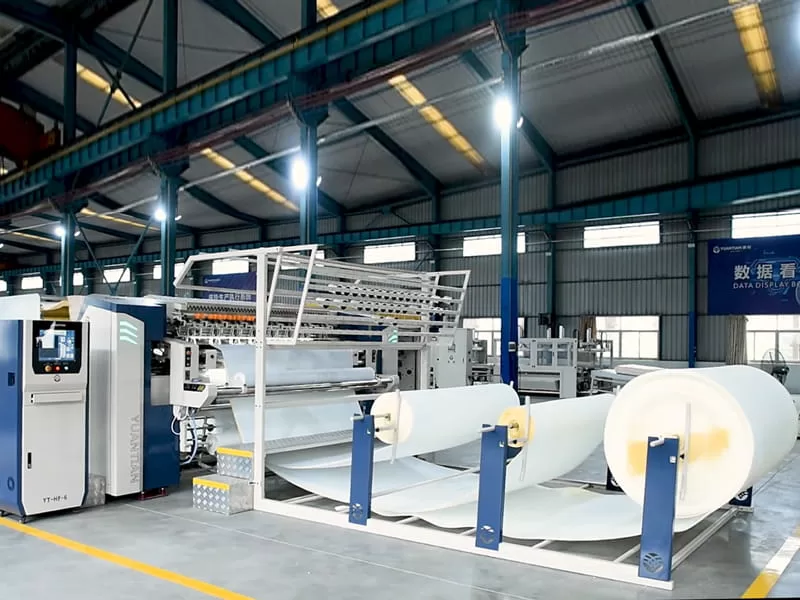
Mattress Quilting
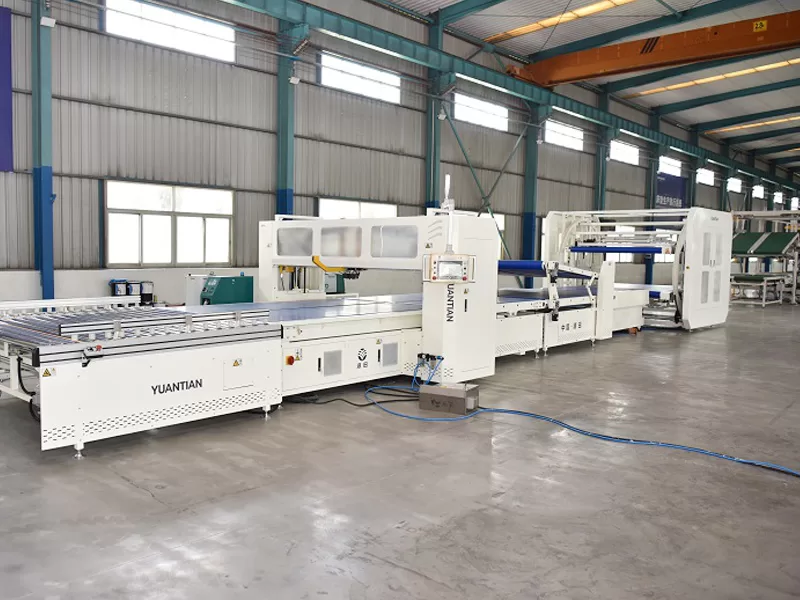
Mattress Spraying Line
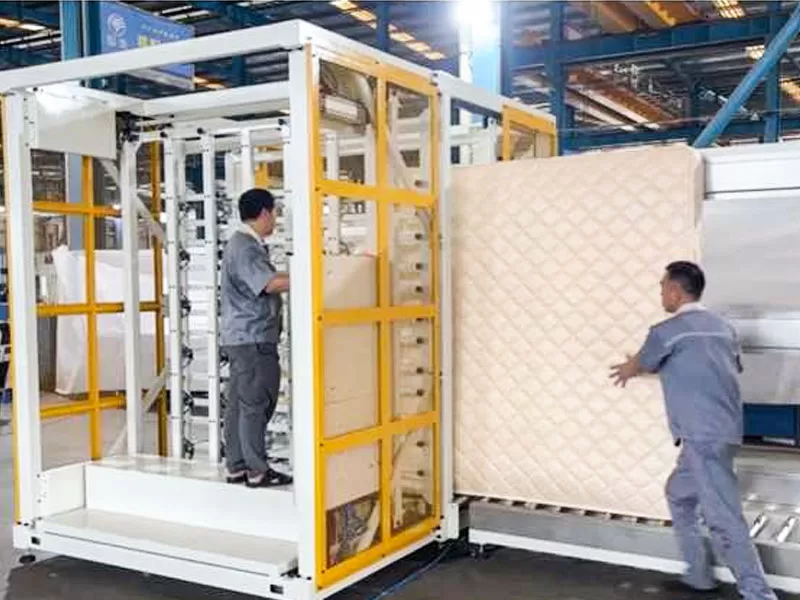
Mattress Tufting Machine
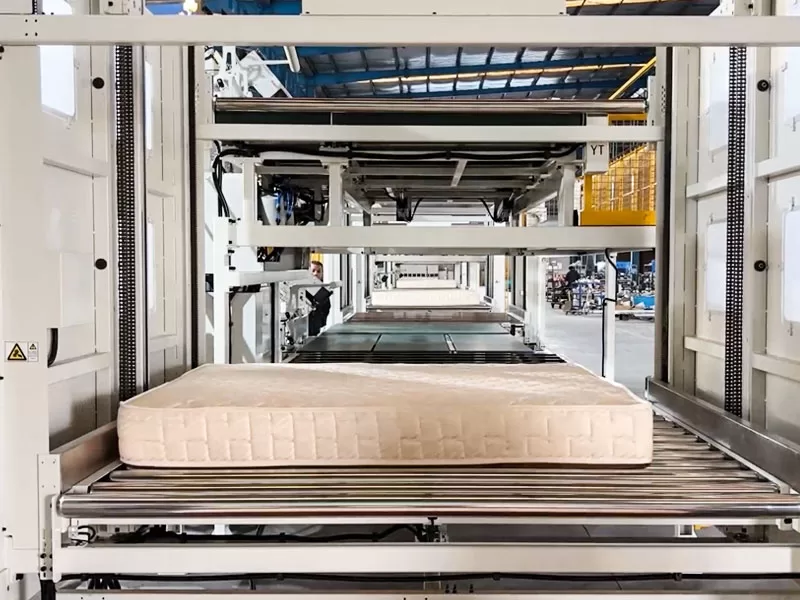
Mattress Auxiliary Modules
Computer Numerical Control (CNC) technology has revolutionized the manufacturing industry, offering precision, efficiency, and flexibility that manual processes simply cannot match. In the mattress manufacturing sector, CNC control has become increasingly integral, particularly in sewing and quilting machines.
These machines are responsible for stitching and quilting the various layers of a mattress, tasks that require a high degree of accuracy and consistency. This article explores the numerous benefits of CNC control in mattress sewing and quilting machines and how this technology can enhance production efficiency and product quality.
Understanding CNC Control in Mattress Machinery
Before discussing in detail the advantages of CNC control in mattress sewing and quilting machines, it is paramount to understand what CNC technology is and how this technology is applied in such machines.
What is CNC Control?
CNC stands for Computer Numerical Control. It is a technology in which machinery and processes are controlled by computers. In mattress manufacturing, the CNC control system means one can have absolute precision in the sewing and quilting machines.
The machines run many elaborative patterns and operations with very little human interference. The computer-driven process allows every movement or stitch to be done per a previously set instruction. This leads to very high accuracy and repeatability of mattresses manufactured.
Application of CNC in Mattress Sewing and Quilting Machines
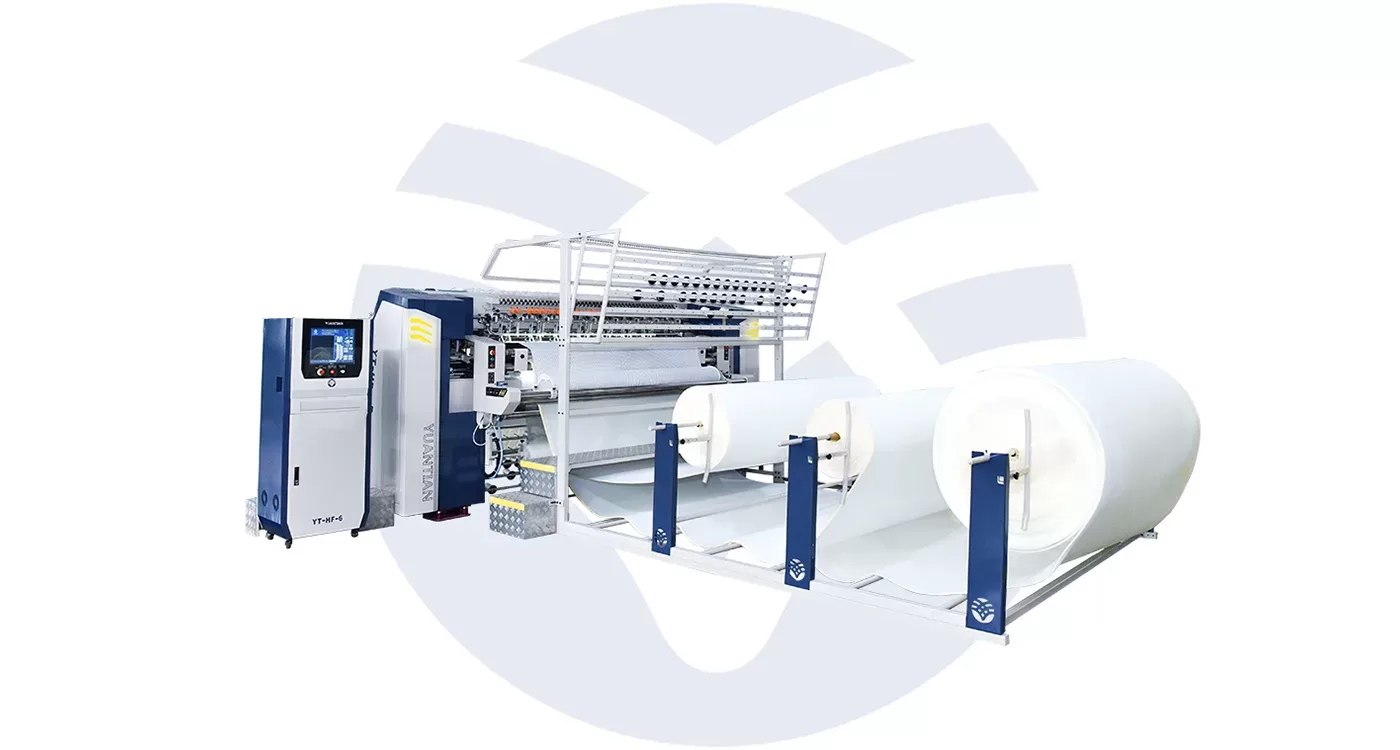
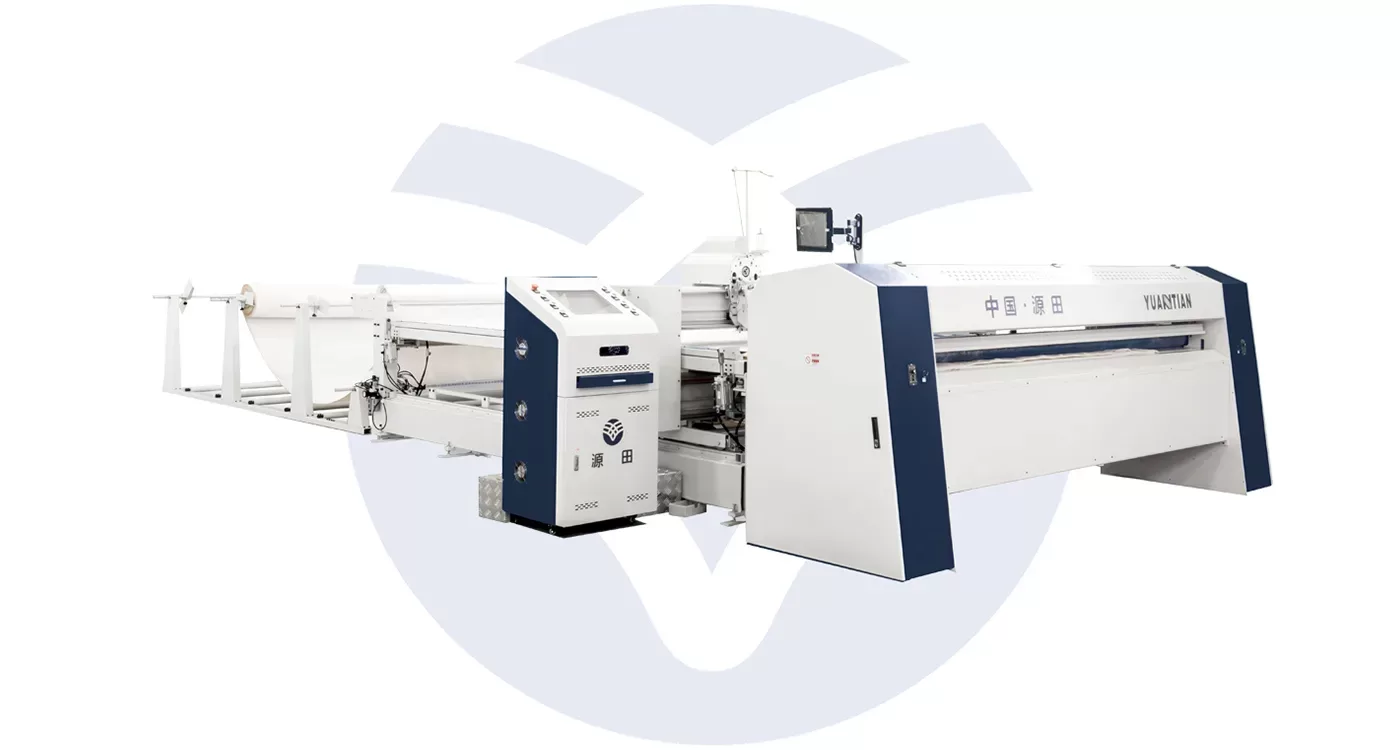
In mattress sewing and quilting machines, CNC control has been invoked for automating the stitching of a mattress, that is, stitching together the layers of a mattress, and also various quilt patterns on the surface.
This technology enables manufacturers to program specific designs, dimensions, and stitch patterns into the machine for execution with exactness. This automation reduces manual adjustments and oversight, thus making production faster and more uniform.
Enhanced Precision and Consistency
The best benefit that CNC offers to mattress sewing machines is the enhanced precision and consistency it can provide for the manufacturing process.
Precision in Stitching
The stitch pattern executed by a CNC-controlled machine can be done with extreme accuracy, placing every stitch exactly where it should be. This is quite important in mattress production, where small deviations may affect not only the structural integrity but also the appearance of the final product.
They are great at making very complicated quilt patterns that are very hard to realize by hand. Technology provides the chance for detailed designs, perfectly aligned and with uniformity, therefore adding to the aesthetics of the mattress. Sewing of edges and seams in a mattress is by way of a CNC-controlled uniform stitching of threads which is secure and hence another contributor to durability.
Consistency Across Production Runs
CNC control also guarantees that batches produced could be consistent, even up to hundreds, which is a primary consideration by manufacturers producing upwards of mattresses in very large quantities.
Because a pattern or design programmed into the machine is replicable continuously with consistency across hundreds, possibly thousands, of mattresses, this uniformity ensures product quality and customer expectation. With the fine-tuned precision and repeatable operation of machines controlled by CNC, the likelihood of defects due to human error-such as uneven stitching or misaligned patterns down tremendously.
Increased Production Efficiency
While integrating CNC control in mattress sewing and quilting machines, the output of production has shown great improvement.
Faster Production Speed
CNC machines can run at much higher speeds compared to their manual or semi-automatic versions, enabling the manufacturer to increase output without sacrificing quality.
This also means that it is possible to program the machine to run at optimal speeds depending on the material being used and the pattern being executed, something that sees most processes completed faster than it would have been with purely manual processes. Also, CNC machines can run continuously with minimal supervisor oversight of operations, reducing production downtime and increasing production capacity.
Automation of Complex Processes
Most of the complicated processes involved in mattress sewing and quilting are automated by CNC control, hence reducing skilled labor and minimizing human error.
Thanks to CNC technology, these might be very intricate quilt patterns that are done without human intervention. It not only increases the rate of production but does accommodates a lot of flexibility in the design. These machines operating through CNC can easily be installed in an automated line of production, hence assuring continuity in different stages of mattress manufacturing.
Greater Flexibility in Design and Production
CNC control enables mattress manufacturers to provide more flexibility in both design and production to accommodate rapidly changing market demands and customer preferences.
Customization Capabilities
One of the hallmarks of machines controlled by CNC is the speed and efficiency with which they turn out customized designs. Manufacturers can easily alter machine settings to create custom quilt patterns or stitching designs for an individual order without a lot of retooling or reconfiguring.
With CNC, technology enables the quick prototyping of new designs, thus allowing a manufacturer to bring a new product to the marketplace more quickly and with less associated risk.
Versatility in Material Handling
Meanwhile, CNC-controlled machines are also varied concerning the kind of material they can work with, from the well-known fabrics traditionally used up to state-of-the-art, high-performance textile materials.
They can be set to operate differently on various materials, ensuring stitching performance is always optimized for different fabrics. Easy changeovers of materials and patterns enable manufacturers to try new designs and produce differentiated products.
Improved Quality Control
Therefore, quality control at every step in mattress manufacturing is very important, and CNC plays an essential role here.
Real-Time Monitoring and Adjustments
The possibility of real-time monitoring with a CNC machine gives operators an edge in supervising the course of stitching or quilting as it happens whether to make any necessary adjustments or not.
This means the machine can identify defects or any deviation from the programmed pattern and, if needed, automatically perform whatever changes are necessary to get the process back on track, minimizing a defect in the finished product. Because of the precision of CNC control, every mattress manufactured will be to the same high standard, ensuring stitch quality and pattern alignment are consistently reproduced.
Documentation and Traceability
Most CNC control systems have means for documentation of the production process by traceability and accountability.
It can also log details about every production run, such as patterns used, machine settings, and other adjustments made in the process. Such logs form the basis for quality assurance programs that will help them to trace back any problem to its very source and apply corrective measures.
Cost Savings and Return on Investment (ROI)
While the initial investment in such CNC-controlled mattress sewing and quilting machines can be a little higher compared to the traditional ones, the eventual cost savings along with the return on the same can be substantial.
Reduced Labor Costs
CNC machines dispense with most of the need for skilled labor largely because many of the tasks in question, which traditionally require manual intervention, are quite automated.
With CNC control, operators require less specialized training, which reduces the training cost of new employees. Fewer operators are required to supervise production, and labor resources may be utilized more effectively throughout the factory.
Minimized Waste and Material Costs
Waste is reduced in most cases because the material to be used is lessened, which means that the cost affiliated with material would decrease. The accuracy within the operation of the CNC machines means that less material goes to waste due to a mistake or misalignment. Reduced defects and reworks translate into cost reductions in the overall production to give way to an improved return on investment.
Conclusion
The integration of CNC control into mattress sewing and quilting machines brings a lot of benefits that could enhance production efficiency, product quality, and profitability. From increased precision and consistency to greater flexibility and cost savings, CNC technology is a powerful tool for mattress manufacturers looking to stay competitive in a demanding market.
By investing in CNC-controlled machinery, manufacturers can streamline their operations, reduce labor and material costs, and offer products that meet the highest standards of quality and design. As the mattress industry continues to evolve, embracing CNC technology will be key to achieving long-term success and growth.